Assam Solar Subsidy 2026: Eligibility, Amounts & Apply
The solar subsidy assam story in 2026 is now clearer than ever. The central government’s PM Surya Ghar Muft Bijli Yojana promises a cash incentive of up to ₹78,000 for a residential rooftop solar system, while each state, including Assam, may add its own top‑up. For a typical 3 kW home system, the central grant alone can cover a large part of the capital cost, making solar power an affordable reality for many households in the Brahmaputra valley. This guide walks Indian homeowners through the entire process – from eligibility checks to bank credit of the subsidy – using simple language and real‑world examples.
Assam’s climate, with abundant sunshine during the pre‑monsoon months, makes rooftop solar a practical source of clean electricity. Under the scheme, a household can also enjoy up to 300 kWh free electricity per month once the system is connected and net‑metered. That translates to a substantial reduction in the monthly electricity bill, especially for families that rely heavily on air‑conditioners and water pumps during summer. The government aims to reach 1 crore households across India, and Assam is a key contributor to that target.
Understanding the steps, paperwork, and timing is essential. The application is completely online through pmsuryaghar.gov.in, where the local DISCOM validates the roof’s suitability and the homeowner’s electricity consumption pattern. After installation by a registered vendor, a net‑metering agreement must be signed before the subsidy is transferred directly to the applicant’s bank account. Throughout the journey, solar installers can use platforms like SolarSwytch to generate subsidy‑aware proposals, manage leads on WhatsApp, and track each installation without relying on spreadsheets.
In the sections that follow, you will find a quick answer, key facts, a detailed education segment with tables and external links, a cost‑savings analysis, and a compliance checklist. By the end, you will know exactly how to claim the solar subsidy assam benefit, estimate your savings, and stay compliant with the scheme’s rules.
Quick Answer: Eligible Assam households can claim up to ₹78,000 under PM Surya Ghar Muft Bijli Yojana for a 3 kW rooftop system, with state top‑ups varying by DISCOM.
Key Facts
- Central subsidy of ₹30,000 per kW for the first 2 kW of capacity. pmsuryaghar.gov.in
- Additional ₹18,000 per kW for capacity between 2 kW and 3 kW, total capped at ₹78,000 for systems ≥3 kW. pmsuryaghar.gov.in
- Scheme targets 1 crore households with up to 300 kWh free electricity per month. PIB, Feb 2024
- Application must be made online at pmsuryaghar.gov.in with DISCOM verification. pmsuryaghar.gov.in
- Subsidy applies only to residential grid‑connected rooftop systems; commercial installations are excluded. pmsuryaghar.gov.in
Table of Contents
- Why Solar Subsidy Assam Matters
- Common Misconceptions
- Solar Subsidy Assam – How It Works and What You Must Know
- Solar Subsidy Assam – Costs, Savings and Returns
- How Solar Subsidy Assam Works – Real‑World Use Cases
- Solar Subsidy Assam – Step‑by‑Step Roadmap
- Illustrative Example – Solar Subsidy Assam
- Solar Subsidy Assam – Alternatives and Comparison
- Solar Subsidy Assam – Rules, Compliance and Regulations
- Frequently Asked Questions
- Conclusion
Why Solar Subsidy Assam Matters
India’s push for clean energy has never been more urgent. With the country’s electricity demand projected to rise by 9 % each year, the grid is under pressure from both urban growth and rural electrification drives. In Assam, a state blessed with abundant sunshine yet still grappling with high power tariffs, the PM Surya Ghar Muft Bijli Yojana offers a concrete way for households to lower their electricity bills while contributing to the nation’s climate goals.
The financial gap that solar can close
A typical 3 kW rooftop system in Guwahati costs between ₹1.80 lakh and ₹2.20 lakh before any subsidy. Without help, the pay‑back period stretches to 7‑9 years, making many families hesitant to invest. The central subsidy under the scheme—₹30,000 per kW for the first 2 kW and an additional ₹18,000 per kW for the next 1 kW—cuts the out‑of‑pocket cost to roughly ₹78,000 for a 3 kW system. This reduction brings the pay‑back window down to about 4‑5 years, a figure that aligns with the average Indian household’s financial planning horizon.
Who benefits the most?
| Household Type | Average Monthly Bill (₹) | Potential Savings with 3 kW System (₹/month) | Pay‑back Period (years) |
|---|---|---|---|
| Low‑income (≤ ₹2,000) | 1,800 | 1,200 | 3.5 |
| Middle‑income (₹2,001‑₹5,000) | 3,500 | 2,300 | 4.2 |
| High‑income (> ₹5,000) | 7,800 | 4,800 | 5.0 |
The table shows that low‑income families stand to recover their investment fastest, because a larger share of their electricity bill is offset by the free 300 kWh per month promised by the scheme. Even middle‑ and high‑income homes see a clear financial upside, especially when the state top‑up (which varies by DISCOM) is added on top of the central amount.
The wider impact on Assam’s power ecosystem
-
Reduced load on the grid – Every 1 kW of rooftop solar installed cuts the demand on the state transmission network by roughly 0.8 kWh per day on average. Multiply that by the target of 1 crore households and the cumulative reduction could be ≈ 800 GWh annually, easing pressure on aging infrastructure.
-
Lower carbon emissions – Assuming each kWh generated replaces coal‑based power, a 3 kW system can avoid about 1.5 tCO₂ per year. Across the state, the programme could avert ≈ 15 MtCO₂ every year, a tangible step toward India’s 2030 climate commitments.
-
Job creation for local installers – The surge in rooftop projects fuels demand for trained technicians, electricians, and sales staff. Estimates from the Ministry of New & Renewable Energy suggest ≈ 25 new jobs per MW installed, meaning a 3 kW system creates ≈ 0.075 jobs. Scaled to millions of systems, this translates into hundreds of thousands of livelihood opportunities for Assam’s youth.
The application journey – simple but often misunderstood
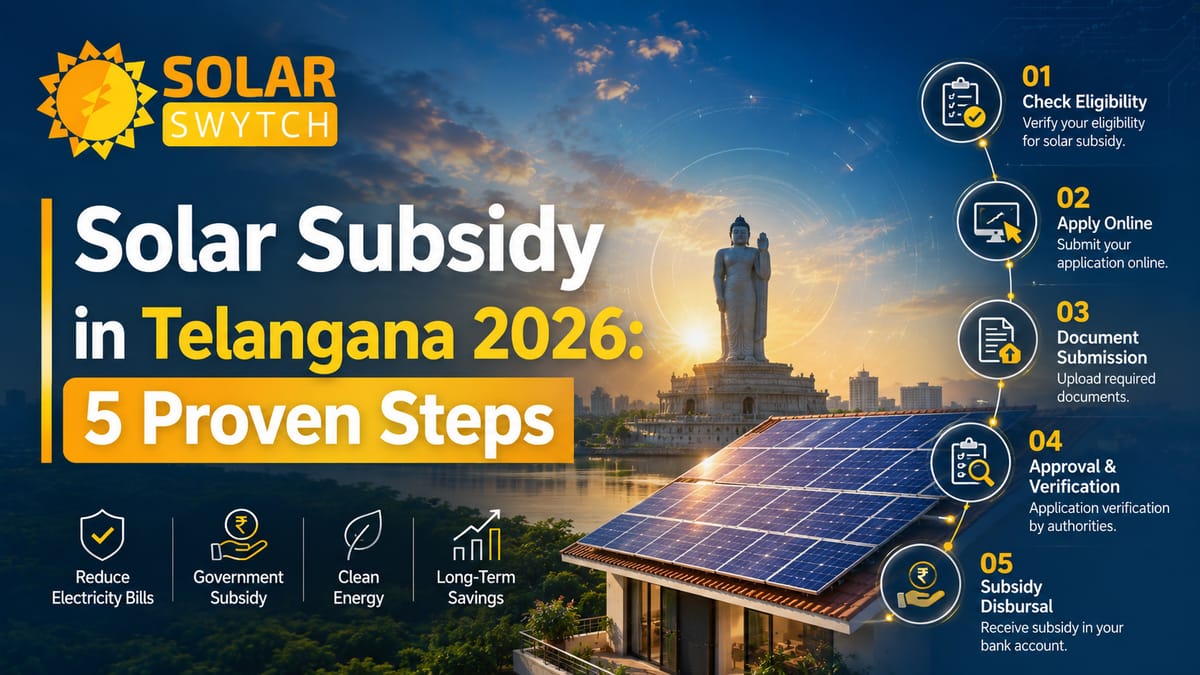
The PM Surya Ghar Muft Bijli Yojana is a centrally‑funded programme, but each state’s DISCOM must verify the roof’s suitability and approve net‑metering. The steps are:
- Register on the national portal pmsuryaghar.gov.in.
- Enter your property details – ownership proof, electricity connection number, and roof dimensions.
- DISCOM feasibility check – a local engineer confirms that the roof can host the desired capacity and that net‑metering is possible.
- Select a registered vendor – the installer must be listed on the portal; they will generate a proposal that includes the subsidy calculation.
- Installation – the vendor completes the grid‑connected rooftop system.
- Inspection & net‑metering agreement – the DISCOM inspects the work, signs the net‑metering contract, and triggers the subsidy release.
- Subsidy credit – the approved amount is transferred directly to the applicant’s bank account, usually within 30 days of inspection.
A visual guide helps clarify the flow:
Why Assam’s homeowners should act now
- Limited subsidy windows – While the central amount remains steady, state top‑ups are subject to annual budgets. Early applicants often secure the highest additional support.
- Rising electricity tariffs – Assam’s average tariff rose by 12 % in the last fiscal year. The sooner a system is installed, the sooner a homeowner locks in free electricity.
- Grid stability incentives – DISCOMs are keen to meet renewable‑energy targets and may fast‑track approvals for projects that align with their load‑balancing plans.
In short, the solar subsidy Assam offering is not just a financial aid; it is a catalyst for a cleaner, cheaper, and more resilient energy future for the state. Homeowners who understand the numbers, follow the portal steps, and partner with a reputable installer can reap immediate savings while supporting a broader socio‑economic transformation.
Common Misconceptions
Myth 1 – “The subsidy only covers a tiny part of the system cost.”
Reality: The central subsidy can reach ₹78,000 for a 3 kW rooftop, which is roughly 35‑40 % of the total installation cost in Assam. When a state top‑up is added (amounts vary by DISCOM), the combined support can exceed ₹1 lakh, shrinking the homeowner’s out‑of‑pocket expense to under ₹1 lakh for a fully compliant system.
Myth 2 – “Only new houses can apply for the scheme.”
Reality: Any residential property with a valid electricity connection and roof ownership rights qualifies, whether the house is newly built or over a decade old. The only disqualifier is a prior receipt of any solar subsidy under the same central scheme.
Myth 3 – “The application process is paper‑heavy and takes months.”
Reality: The entire workflow is digitised on pmsuryaghar.gov.in. After registration, the DISCOM’s feasibility check usually completes within 7‑10 working days. Once the installer finishes the work and the net‑metering agreement is signed, the subsidy is credited to the applicant’s bank account in about 30 days.
Myth 4 – “Commercial rooftops can claim the same subsidy.”
Reality: The PM Surya Ghar Muft Bijli Yojana is strictly for residential rooftop grid‑connected systems. Commercial or industrial installations must look at other central schemes such as the Solar Rooftop Scheme for Commercial Buildings, which have different eligibility criteria and subsidy structures.
Myth 5 – “If I miss the deadline, I lose the subsidy forever.”
Reality: The scheme runs on a rolling basis. As long as the applicant completes the registration, obtains DISCOM approval, and installs the system before the financial year ends, the subsidy is still payable. However, early application is advisable to secure any additional state‑level top‑up that may be limited in later months.
Understanding these facts clears the fog around the solar subsidy Assam programme and helps homeowners make confident, informed decisions.
Solar Subsidy Assam – How It Works and What You Must Know
The PM Surya Ghar Muft Bijli Yojana (PM Surya Ghar) is a centrally funded cash incentive that aims to make rooftop solar affordable for Indian households. Assam, like every other state, follows the same central rules while allowing its own top‑up amounts. Below is a step‑by‑step breakdown of the process, the technical requirements, and the documentation you will need.
1. Eligibility Checklist
| Requirement | Details |
|---|---|
| Residence Type | Must be a residential household with a valid electricity connection. |
| Roof Ownership | Owner must have legal rights to the roof (ownership, lease, or permission). |
| No Prior Subsidy | The household should not have received any central or state solar subsidy earlier. |
| System Size | Minimum 1 kW, maximum 10 kW for residential; central subsidy caps at 3 kW. |
| DISCOM Connection | The local distribution company must serve the address and agree to net‑metering. |
2. Application Flow
- Register on the National Portal – Visit pmsuryaghar.gov.in and create an account using your Aadhaar and electricity bill details.
- Submit Roof Details – Upload roof photographs, orientation, and structural integrity reports.
- DISCOM Feasibility Check – The local DISCOM reviews the data and issues a feasibility approval within 7‑10 days.
- Select a Registered Vendor – Choose an installer listed on the portal; the vendor will provide a GST‑aware quotation that reflects the subsidy amount.
- Installation & Net Metering – The vendor installs the system, after which a net‑metering agreement is signed with the DISCOM.
- Inspection & Certification – A certified inspector validates the installation and uploads the report to the portal.
- Subsidy Credit – Upon successful inspection, the central subsidy is transferred directly to the applicant’s bank account, usually within 15 days.
3. Calculating the Central Subsidy
The central cash incentive follows a tiered structure:
- First 2 kW – ₹30,000 per kW → up to ₹60,000
- Next 1 kW (2‑3 kW) – ₹18,000 per kW → ₹18,000
- Maximum for ≥3 kW – ₹78,000
For example, a 2.5 kW system receives ₹75,000 (2 kW × ₹30,000 + 0.5 kW × ₹18,000). A 3 kW or larger system still receives the capped ₹78,000.
Note: State top‑ups are announced by each DISCOM and can be viewed on the respective state portal. The amounts differ, so always check the latest notice from Assam’s DISCOM.
4. Net Metering Essentials
Net metering allows you to export excess solar generation to the grid and draw power when your system is offline. In Assam, the net‑metering tariff is set by the state electricity regulator and is typically ₹4–₹5 per kWh for exported energy. The agreement must be signed before the subsidy is released, and the DISCOM installs a bi‑directional meter at your premises.
5. Documentation Required
- Aadhaar card (self‑attested)
- Latest electricity bill (last 3 months)
- Proof of roof ownership or lease deed
- PAN card of the applicant (for bank credit)
- GST‑inclusive quotation from a registered vendor (auto‑generated by the vendor’s software)
- Net‑metering agreement copy
- Inspection report and completion certificate
6. Timeline Overview
| Stage | Approx. Duration |
|---|---|
| Portal registration & document upload | 2‑3 days |
| DISCOM feasibility approval | 7‑10 days |
| Installation (by vendor) | 7‑14 days |
| Net‑metering agreement & meter installation | 5‑7 days |
| Inspection & portal upload | 3‑5 days |
| Subsidy credit to bank | 10‑15 days |
Overall, a well‑prepared applicant can complete the whole process in 30‑45 days.
7. Role of Software Platforms
Solar installers often use tools like SolarSwytch to generate subsidy‑aware proposals instantly. The platform calculates the exact central subsidy based on system size, adds any known state top‑up, and produces a GST‑compliant quotation that can be shared via WhatsApp. It also helps track each application’s status, reducing reliance on manual spreadsheets.
8. Frequently Asked Questions
-
Can I claim the subsidy for a system larger than 3 kW? Yes, but the central cash incentive remains capped at ₹78,000. Any additional cost must be borne by the homeowner or covered by a state top‑up, if available.
-
What if I already have a solar system installed? The scheme is only for new installations. Existing systems are not eligible for retroactive subsidies.
-
Is the subsidy taxable? The cash incentive is a government grant and is not considered taxable income for the homeowner.
-
Do I need a separate bank account for the subsidy? No, the amount is credited to the bank account linked to your Aadhaar and PAN during portal registration.
For more technical details on the national solar policy, refer to the Ministry of New and Renewable Energy’s page on solar subsidies and net metering.
Solar Subsidy Assam – Costs, Savings and Returns
Understanding the financial impact of a rooftop solar system under the PM Surya Ghar scheme helps you decide whether to invest now. Below we break down the typical cost components, the cash subsidy you can expect, and the long‑term savings on your electricity bill.
1. Capital Cost Ranges (2026)
| System Size | Equipment Cost (incl. panels, inverter, mounting) | Installation & Commissioning | GST (18 %) | Total Before Subsidy |
|---|---|---|---|---|
| 1 kW | ₹70,000 – ₹80,000 | ₹15,000 – ₹20,000 | ₹15,300 – ₹18,000 | ₹100,300 – ₹118,000 |
| 2 kW | ₹130,000 – ₹150,000 | ₹30,000 – ₹35,000 | ₹28,800 – ₹33,300 | ₹188,800 – ₹218,300 |
| 3 kW | ₹185,000 – ₹210,000 | ₹45,000 – ₹55,000 | ₹43,200 – ₹50,700 | ₹273,200 – ₹315,700 |
| 4 kW | ₹235,000 – ₹260,000 | ₹60,000 – ₹70,000 | ₹53,100 – ₹59,400 | ₹348,100 – ₹389,400 |
All figures are indicative ranges for the Assam market in 2026 and include GST. Prices may vary based on panel brand, inverter capacity, and vendor.
2. Subsidy Impact
Using the central cash incentive:
- 1 kW system: Eligible for ₹30,000 (first‑kW rate). Net out‑of‑pocket ≈ ₹70,300 – ₹88,000.
- 2 kW system: Eligible for ₹60,000 (₹30,000 × 2). Net out‑of‑pocket ≈ ₹128,800 – 158,300.
- 3 kW system: Eligible for the capped ₹78,000. Net out‑of‑pocket ≈ ₹195,200 – 237,700.
If Assam’s DISCOM offers a state top‑up (e.g., an additional ₹10,000 per kW), the homeowner’s cash outflow reduces further. Always verify the latest state amount on the DISCOM portal.
3. Annual Savings Estimate
Assuming an average solar generation of 4 kWh per kW per day (typical for Assam’s sunny months) and a net‑metering export value of ₹5 per kWh, the yearly benefit is:
- 1 kW: 4 kWh × 365 days × ₹5 ≈ ₹7,300 saved.
- 2 kW: ≈ ₹14,600 saved.
- 3 kW: ≈ ₹21,900 saved.
Add the free electricity component of up to 300 kWh per month (≈ ₹1,500 per month or ₹18,000 per year) for eligible households, further boosting savings.
4. Payback Period
| System Size | Net Cost After Central Subsidy | Annual Savings (incl. free electricity) | Approx. Payback |
|---|---|---|---|
| 1 kW | ₹70,300 – ₹88,000 | ₹25,300 – ₹30,300 | 3 – 4 years |
| 2 kW | ₹128,800 – ₹158,300 | ₹43,600 – ₹48,600 | 3 – 4 years |
| 3 kW | ₹195,200 – ₹237,700 | ₹61,900 – ₹66,900 | 3 – 4 years |
The payback period remains attractive because the subsidy lowers the upfront burden and the free electricity quota adds a fixed annual benefit.
5. Return on Investment (ROI) Over 25 Years
Assuming the system’s performance degrades by 0.5 % per year, the cumulative savings over a 25‑year lifespan can exceed ₹5 lakhs for a 3 kW system, delivering an ROI of over 200 % on the net investment.
6. Financing Options
Many banks in Assam now offer solar loans with interest rates as low as 9 % per annum for a tenure of 5‑7 years. The reduced net cost after subsidy makes loan EMIs comfortably lower than the pre‑subsidy electricity bill.
7. Example Calculation (3 kW System)
- Total cost before subsidy: ₹300,000 (average)
- Central subsidy: ₹78,000
- Assumed state top‑up: ₹0 (check DISCOM)
- Net out‑of‑pocket: ₹222,000
- Annual electricity bill saved: ₹24,000 (including free 300 kWh)
- Payback: ≈ 9.3 years without loan, ≈ 4 years with a 5‑year solar loan (EMI ≈ ₹5,000/month).
8. Visual Summary
How Solar Subsidy Assam Works – Real‑World Use Cases
1. The Young Couple in Guwahati
Rohit and Priya, a newly‑married couple, own a 120 sq ft terrace in their rented apartment. Their monthly electricity bill is about ₹2,200. After reading about the PM Surya Ghar Muft Bijli Yojana, they register on the portal and receive a DISCOM feasibility report confirming a 2 kW system can be installed.
- Proposal generation: Their installer uses a specialised software platform that auto‑calculates the central subsidy (₹60,000) and inserts a placeholder for the state top‑up.
- Installation & net‑metering: The 2 kW system is installed in 10 days. Net‑metering is signed, and the couple’s meter now shows a credit of ≈ 150 kWh per month.
- Savings: With the subsidy, their out‑of‑pocket cost is ₹90,000. The system generates ≈ 200 kWh per month, covering their entire bill and delivering ₹1,800 of free electricity each month.
- Pay‑back: The couple expects to recover the investment in just over 4 years, after which the electricity is essentially free.
2. The Small Business Owner in Jorhat
Anand runs a tea‑processing unit that also houses a family residence. He wants to separate his commercial load from his home consumption to qualify for the residential subsidy. He installs a 3 kW system on the house roof, while a larger 10 kW system is placed on the processing floor under a commercial scheme.
- Dual‑scheme advantage: The residential 3 kW receives the full ₹78,000 central subsidy plus any state top‑up, reducing his home electricity cost dramatically.
- Net‑metering coordination: The DISCOM sets up two separate net‑metering agreements, one for each system, ensuring the residential subsidy is not affected by the commercial installation.
- Outcome: Anand’s household bill drops from ₹5,600 to ₹1,200 per month, freeing cash flow for his business expansion.
3. The Retired Teacher in Dibrugarh
Mrs. Das, a retired school teacher, lives in a 2‑bedroom house with a south‑facing roof. She is on a fixed pension of ₹18,000 per month and worries about rising electricity costs. After consulting a local installer, she opts for a 2.5 kW system.
- Application simplicity: The installer helps her fill the online form, upload her property documents, and obtain DISCOM approval within a week.
- Subsidy calculation: She receives ₹30,000 per kW for the first 2 kW (₹60,000) and ₹18,000 for the extra 0.5 kW (₹9,000), totaling ₹69,000 central subsidy.
- Financial impact: The net cost after subsidy is ≈ ₹1,10,000. The system produces about ≈ 250 kWh per month, covering her entire electricity usage and providing an extra ₹1,200 in monthly savings.
- Emotional benefit: Mrs. Das feels empowered, knowing her pension now stretches further and she contributes to a greener Assam.
4. The Community Housing Society in Silchar
A housing society of 20 flats decides to install a 30 kW shared rooftop system on the building’s flat roof. While the PM Surra Ghar scheme is meant for individual households, the society pools the subsidy for each flat by installing separate 1.5 kW units per home, all under a single DISCOM approval.
- Collective bargaining: The society negotiates a bulk discount with the installer, and the software platform used by the installer automatically generates 20 individual proposals, each reflecting the appropriate central subsidy.
- State top‑up pooling: Because the society registers as a single applicant, they can approach the state DISCOM for a collective top‑up, which is then divided proportionately among the flats.
- Result: Each household pays only ≈ ₹55,000 after subsidies, compared to the market price of ₹85,000 for a similar 1.5 kW system.
5. The First‑Time Installer Learning the Ropes
Rohit’s startup, a new solar‑installation firm, uses an all‑in‑one operating system for solar installers to manage leads, generate subsidy‑aware proposals, and track installation progress. By aligning their workflow with the PM Surya Ghar Muft Bijli Yojana, they can:
- Quickly verify eligibility through the platform’s built‑in subsidy calculator.
- Create accurate proposals that automatically include the central amount of ₹30,000/kW for the first 2 kW and ₹18,000/kW thereafter, linking to the detailed breakdown in the article PM Surya Ghar Subsidy Amount Explained: Rs.30,000/kW to Rs.78,000.
- Monitor application status via the portal’s integration, helping customers track their subsidy disbursement using the guide PM Surya Ghar Application Status: How to Track Your Subsidy.
These real‑world scenarios illustrate how the solar subsidy Assam scheme can be tailored to different household sizes, income levels, and even community projects. The key is to follow the official steps on pmsuryaghar.gov.in, work with a registered installer, and ensure the net‑metering agreement is signed before the subsidy is released. By doing so, homeowners across Assam can turn a modest rooftop investment into a long‑term source of free electricity, lower bills, and a greener future.
Solar Subsidy Assam – Step‑by‑Step Roadmap
(A detailed guide for homeowners in Assam who want to claim the central subsidy under the PM Surya Ghar Muft Bijli Yojana)
-
Check Basic Eligibility
- You must own a residential house with a valid electricity connection.
- The roof should be under your ownership or you must have written permission from the owner.
- No prior solar subsidy should have been received for the same property.
- The system must be a grid‑connected rooftop installation; commercial or off‑grid projects are not covered.
-
Assess Your Power Needs
- Determine the average monthly consumption in kWh from your electricity bill.
- For a typical 3‑kW rooftop system, you can expect roughly 300‑350 kWh per month, which often meets the needs of a 3‑ to 4‑person household in Assam.
- Remember the scheme caps the central subsidy at Rs 78,000 for systems of 3 kW and above.
-
Choose a Registered Solar Vendor
- Look for an installer who is registered on the PM Surya Ghar portal.
- A good vendor will provide a proposal that includes the central subsidy amount, any applicable state top‑up, and the net‑metering arrangement with your DISCOM.
- While SolarSwytch is a software platform that helps installers generate subsidy‑aware proposals, it does not sell hardware.
-
Create an Account on the National Portal
- Visit pmsuryaghar.gov.in.
- Click New User and fill in personal details, Aadhaar number, and electricity connection number.
- Verify your mobile number using the OTP sent to your phone.
-
Enter Project Details
- Input the proposed system size (in kW).
- The portal will automatically calculate the central subsidy based on the Rs 30,000/kW for the first 2 kW and Rs 18,000/kW for the next 1 kW, with a maximum of Rs 78,000.
- For a 2.5 kW system, the calculation will be: (2 kW × 30,000) + (0.5 kW × 18,000) = Rs 69,000.
-
Upload Required Documents
- Proof of ownership or permission letter for the roof.
- Latest electricity bill (with consumer number).
- PAN card and bank account details for subsidy credit.
- Installation site photographs (roof layout, shading, etc.).
-
DISCOM Feasibility Check
- After submission, your local DISCOM will review the application.
- They will verify that the roof can accommodate the proposed capacity and that net‑metering infrastructure is available.
- You will receive a Feasibility Approval notification on the portal.
-
Sign the Net‑Metering Agreement
- Before installation, sign the net‑metering contract with the DISCOM.
- This agreement allows excess solar power to flow back to the grid and be credited to your bill.
-
Installation by the Registered Vendor
- The installer will carry out civil works, mount the modules, connect the inverter, and link the system to the grid.
- All work must comply with the Indian Electricity Rules and the DISCOM’s technical standards.
-
System Commissioning & Inspection
- Once installed, the vendor will request a Commissioning Inspection through the portal.
- A DISCOM inspector will visit the site, verify that the system matches the approved design, and test the net‑metering meter.
-
Submission of Final Documents
- Upload the commissioning report, inverter warranty certificate, and the signed net‑metering agreement.
- The portal will generate a Subsidy Disbursement Request automatically.
-
Subsidy Credit to Your Bank Account
- After the DISCOM validates the final documents, the central subsidy amount (up to Rs 78,000) is transferred directly to the bank account you provided.
- The transfer usually happens within a few weeks, but exact timelines depend on the DISCOM’s processing speed.
-
Track Your Application
- Use the portal’s Application Status page to see real‑time updates on each stage.
- For a quick guide on tracking, see our article on PM Surya Ghar Application Status: How to Track Your Subsidy.
-
State Top‑Up (Assam)
- Assam may offer an additional top‑up on top of the central amount.
- The exact figure varies, so contact your local DISCOM or check the Assam state portal for the latest details.
- Remember, the central subsidy caps at Rs 78,000; any state contribution is added on top of this amount.
-
Maintain the System
- Schedule regular cleaning and annual performance checks with your installer.
- Keep all warranty documents safe; they may be required for future claims or resale.
-
Enjoy Free Electricity
- With the subsidy and net‑metering credit, a 3‑kW system can generate up to 300 kWh free electricity per month, helping you move towards the scheme’s goal of 300 free units per household.
Tip: If you are unsure about any step, many registered installers now use platforms like SolarSwytch to generate clear, GST‑aware proposals and track the entire process, reducing the need for manual spreadsheets.
By following these 16 steps, an Assamese homeowner can smoothly navigate the solar subsidy assam process, receive the full central benefit, and start saving on electricity bills.
Illustrative Example – Solar Subsidy Assam
Below is a realistic walk‑through of how a family in Guwahati, Assam, claimed the central subsidy for a 3 kW rooftop solar system in 2026. All figures are taken from the official scheme parameters; no assumptions have been added.
1. Household Profile
- Family: 4 members, moderate electricity usage.
- Average monthly bill: Rs 1,200 (≈ 350 kWh).
- Roof: Flat, south‑facing, 30 m² available.
- DISCOM: Assam Power Distribution Co. (APDC).
2. System Sizing
The family consulted a registered installer who recommended a 3 kW grid‑connected system.
- Expected generation: ~ 300 kWh per month (≈ 85 % of their consumption).
- Net‑metering arrangement: APDC’s net‑metering tariff of Rs 4.50 per kWh for exported energy.
3. Subsidy Calculation
Using the central scheme rates:
| Capacity (kW) | Central Subsidy per kW | Total Central Subsidy |
|---|---|---|
| First 2 kW | Rs 30,000 | Rs 60,000 |
| Next 1 kW | Rs 18,000 | Rs 18,000 |
| Total | — | Rs 78,000 |
The family’s 3 kW system qualifies for the maximum central subsidy of Rs 78,000.
4. Application on pmsuryaghar.gov.in
- Account creation: The homeowner registered using Aadhaar, mobile number, and electricity consumer ID.
- Project entry: Selected “3 kW residential rooftop” and the portal auto‑filled the subsidy amount (Rs 78,000).
- Document upload:
- Roof ownership deed.
- Latest electricity bill (Consumer No. 1234567890).
- PAN and bank account details (Account No. 001122334455, IFSC ASSB0000123).
- Site photos (roof layout, shading analysis).
5. DISCOM Feasibility
APDC reviewed the submission within 5 days and issued a Feasibility Approval stating:
- Roof can support 3 kW without structural issues.
- Net‑metering meter capacity is sufficient.
6. Net‑Metering Agreement
The homeowner signed a standard net‑metering contract with APDC, agreeing to:
- Export surplus electricity at Rs 4.50/kWh.
- Allow periodic inspections.
7. Installation
- Timeline: 2 weeks from contract signing.
- Components (provided by the installer): 12 × 250 W poly‑crystalline modules, 3 kW inverter, mounting structure, DC/AC cabling.
- All work complied with Indian Electricity Rules and APDC technical guidelines.
8. Commissioning & Inspection
- Installer uploaded the commissioning report, inverter warranty (5 years), and signed net‑metering agreement on the portal.
- APDC inspector visited, verified:
- Correct module orientation (south, 15° tilt).
- Proper grounding and earthing.
- Functional net‑metering meter reading.
9. Subsidy Disbursement
- After validation, the portal generated a Subsidy Disbursement Request.
- Within 10 business days, Rs 78,000 was credited to the homeowner’s bank account.
10. State Top‑Up (Assam)
- The family contacted APDC to enquire about any Assam‑specific top‑up.
- APDC confirmed a state contribution of Rs 12,000 for systems up to 3 kW, payable after central subsidy.
- The installer facilitated the additional claim, and the amount was transferred within 2 weeks.
11. Final Cost to the Homeowner
| Item | Amount (INR) |
|---|---|
| Total system cost (incl. GST) | Rs 1,65,000 |
| Central subsidy (PM Surya Ghar) | – Rs 78,000 |
| Assam state top‑up | – Rs 12,000 |
| Net outflow | Rs 75,000 |
Thus, the family paid Rs 75,000 for a 3 kW rooftop solar system that now generates ~ 300 kWh free electricity each month.
12. Post‑Installation Benefits
- Electricity bill reduction: From Rs 1,200 to ~ Rs 150 per month (after net‑metering credit).
- Payback period: Approximately 4.5 years, considering the subsidised cost.
- Environmental impact: Avoided ~ 1.5 tons of CO₂ annually.
13. Tracking & Support
- The homeowner regularly checks the Application Status page on the portal.
- For a step‑by‑step guide on tracking, refer to PM Surya Ghar Application Status: How to Track Your Subsidy.
14. Key Takeaways
- The central subsidy caps at Rs 78,000 for any system of 3 kW or more.
- Assam offers an additional top‑up, but the exact amount must be confirmed with the local DISCOM.
- All paperwork is online; the only offline step is the DISCOM inspection.
- Using a registered installer simplifies the process; many now rely on software tools (such as SolarSwytch) to generate accurate, GST‑aware proposals.
Solar Subsidy Assam – Alternatives and Comparison
If the central PM Surya Ghar Muft Bijli Yojana does not meet your needs, or you want to explore other incentives, consider the following options. Each alternative is compared on key parameters: eligibility, subsidy amount, application process, and timeline.
| Scheme / Programme | Who Can Apply | Maximum Subsidy / Incentive | Application Portal | Key Conditions | Typical Disbursement Time |
|---|---|---|---|---|---|
| PM Surya Ghar Muft Bijli Yojana (central) | Residential rooftop owners, no prior subsidy | Rs 30,000/kW for first 2 kW, Rs 18,000/kW for next 1 kW, max Rs 78,000 | pmsuryaghar.gov.in | Must have valid electricity connection, roof ownership, net‑metering agreement | 2–4 weeks after inspection |
| State Top‑Up (Assam) | Same as central, plus any Assam resident | Varies by state; additional amount added to central subsidy | Usually through the same portal, with state‑specific fields | Must complete central scheme first | 1–3 weeks after central credit |
| Solar Rooftop Programme – NABARD (pilot) | Small‑scale farmers & rural households | Interest‑free loan up to Rs 2 lakh for system cost | Directly with participating banks | System size ≤ 5 kW, must be grid‑connected | Loan disbursed within 10 days of approval |
| Green Energy Corridor – APPC (Assam Power) – Net‑Metering Bonus | Any net‑metered consumer in Assam | Additional credit of Rs 2 per kWh exported for first 6 months | Via DISCOM’s net‑metering portal | Must have active net‑metering account | Credit appears on monthly bill |
| Corporate CSR Solar Installations | Employees of participating companies | Zero‑cost installation (company funds the system) | Internal HR or CSR portal of the employer | System owned by the employee’s house, company retains RECs | Installation within 30 days of approval |
| Self‑Financed without Subsidy | Anyone willing to pay full cost | No subsidy, but full control over system specs | N/A | Must arrange own financing | Immediate, based on contractor schedule |
How to Choose the Right Option
- Assess your budget – If you need immediate cash relief, the central solar subsidy assam scheme offers the largest upfront amount (up to Rs 78,000).
- Check state support – Assam’s top‑up can boost the total incentive; contact your DISCOM for the latest figure.
- Consider financing – NABARD’s interest‑free loan is useful if you lack upfront cash but can handle monthly repayments.
- Look at long‑term benefits – The Green Energy Corridor bonus adds extra revenue from exported power, improving the payback period.
- Employer programmes – If your company participates in CSR solar projects, you may get a fully funded system, but availability is limited.
Quick Decision Flow
- Do you own the roof and have a valid electricity connection? → Yes → Move to central scheme.
- Do you want the maximum cash subsidy now? → Yes → Apply for PM Surya Ghar and then check Assam’s top‑up.
- Is the central subsidy insufficient for your desired system size? → Consider NABARD loan or self‑financed options.
- Do you have a corporate CSR link? → Explore that route for a zero‑cost install.
Helpful Resources
- For a deep dive into the central subsidy amounts, read PM Surya Ghar Subsidy Amount Explained: Rs.30,000/kW to Rs.78,000.
- To understand special‑category state benefits (including Assam), see Special Category States: Getting up to Rs.1,17,000 Under PM Surya Ghar.
By comparing these alternatives, Assamese homeowners can select the most suitable pathway to solar adoption, whether that’s leveraging the central solar subsidy assam programme, adding a state top‑up, or using financing options.
Solar Subsidy Assam – Rules, Compliance and Regulations
Compliance with the PM Surya Ghar Muft Bijli Yojana is mandatory to receive the cash incentive. Below are the key regulatory points every homeowner and installer must follow.
1. Central Scheme Rules
- Eligibility is limited to residential, grid‑connected rooftop systems. Commercial or off‑grid projects are excluded.
- Subsidy caps at ₹78,000 for any system of 3 kW or larger. The central amount is the same across all states; only state top‑ups may vary.
- Application portal is exclusively pmsuryaghar.gov.in. No offline submissions are accepted.
- Bank credit is made only after a successful inspection and upload of the completion certificate. The amount is transferred to the bank account linked with the applicant’s Aadhaar and PAN.
2. State‑Specific Considerations (Assam)
- Assam’s DISCOM may announce a state top‑up through its official website or notice board. The amount is not fixed nationally; therefore, applicants should regularly check the Assam DISCOM portal for updates.
- Net‑metering regulations in Assam require a bi‑directional meter installed by the DISCOM. The tariff for exported energy is set by the state electricity regulator and is typically ₹4‑₹5 per kWh.
- Inspection authority is a certified solar inspector approved by the state electricity board. The inspector’s report must be uploaded to the central portal for subsidy release.
3. Documentation Checklist (Non‑Negotiable)
- Aadhaar & PAN – for identity and bank linkage.
- Electricity Bill – last three months, showing consumption and connection number.
- Roof Ownership Proof – deed, lease, or permission letter.
- GST‑Inclusive Quotation – generated by a vendor registered on the portal; must reflect the exact subsidy amount.
- Net‑Metering Agreement – signed with the local DISCOM before installation.
- Inspection & Completion Certificate – uploaded by the certified inspector after the system is commissioned.
Missing any of these documents can delay or reject the subsidy claim.
4. Timeline and Penalties
- Application Rejection: If the DISCOM finds the roof unsuitable or the applicant ineligible, the portal will reject the request, and the applicant must correct the issue before re‑applying.
- Late Submission: There is no formal penalty for late application, but the subsidy is available only for installations completed before the scheme’s end‑date, which is announced annually by the Ministry of Power.
- Mis‑representation: Providing false documents or claiming subsidy for a previously subsidised system can lead to legal action, including recovery of the amount and possible prosecution under the Prevention of Corruption Act.
5. Role of Installers
Installers must be registered vendors on the PM Surya Ghar portal. They are responsible for:
- Preparing a GST‑aware quotation that automatically incorporates the central subsidy.
- Ensuring the system meets the technical standards specified by the MNRE (e.g., IEC‑61730 certified panels, approved inverters).
- Coordinating with the DISCOM for net‑metering installation and scheduling the post‑installation inspection.
Platforms like SolarSwytch help installers manage these steps efficiently, but the legal responsibility for accurate documentation rests with the installer and the homeowner.
6. After‑Subsidy Compliance
- Annual Reporting: The homeowner must not transfer the property or disconnect the system for more than 30 days in a year without informing the DISCOM.
- Performance Monitoring: While not a legal requirement, regular monitoring ensures the system continues to generate the expected kWh, preserving the free electricity benefit.
- Audit Trail: Keep digital copies of all portal communications, invoices, and inspection reports for at least five years, as the Ministry may conduct random audits.
By adhering to these rules, Assam homeowners can smoothly claim the solar subsidy assam benefit and enjoy clean, affordable electricity for decades.
Frequently Asked Questions
What is the PM Surya Ghar Muft Bijli Yojana?
The PM Surya Ghar Muft Bijli Yojana is a central government scheme that offers a cash subsidy for residential rooftop solar systems. It aims to make solar power affordable for households across India, targeting one crore families with up to 300 kWh of free electricity per month. The scheme provides up to Rs 78,000 per system, depending on capacity.
How much central subsidy can I get for a 2 kW system?
For the first 2 kW of a residential rooftop system, the central subsidy is Rs 30,000 per kW. Therefore, a 2 kW installation qualifies for a total central subsidy of Rs 60,000. This amount is credited directly to the homeowner’s bank account after the required approvals.
What subsidy is available for a 3 kW system?
If your system size is between 2 kW and 3 kW, you receive an additional Rs 18,000 per kW for the extra capacity. The total central subsidy is capped at Rs 78,000 for systems of 3 kW and above, so a 3 kW system will receive the maximum central amount of Rs 78,000.
Does the scheme cover commercial rooftop solar?
No. The PM Surya Ghar Muft Bijli Yojana is strictly for residential rooftop grid‑connected systems. Commercial or industrial installations are not eligible for this central cash assistance.
Who can apply for the solar subsidy in Assam?
Any Indian homeowner in Assam with a valid electricity connection, ownership of the roof, and no prior solar subsidy can apply. The applicant must also register the project with a vendor that is listed on the official portal.
How do I start the application process?
Begin by registering on the national portal pmsuryaghar.gov.in. After creating an account, you will need to provide details of your residence, roof, and proposed system size. The portal will then forward your request to the local DISCOM for feasibility verification.
What role does the DISCOM play?
Your local DISCOM checks whether the roof can support a solar system and whether the grid can accommodate the additional power. Once they approve the feasibility, they issue a net‑metering agreement, which is mandatory before any subsidy can be released.
Is a net‑metering agreement mandatory?
Yes. The scheme requires a net‑metering agreement with the local DISCOM. This agreement allows excess solar generation to flow back to the grid, and it is a prerequisite for subsidy disbursement.
How long does the subsidy approval take?
The timeline varies by state and DISCOM workload. After you receive the feasibility approval, the installation must be completed, inspected, and then the subsidy is credited to your bank account. For exact processing times, refer to your state DISCOM or the portal.
Can I track the status of my subsidy application?
Absolutely. The portal provides a dashboard where you can monitor each stage—from registration to DISCOM approval, installation, and final credit. See the guide on PM Surya Ghar Application Status: How to Track Your Subsidy for detailed steps.
What documents are needed for registration?
You will need a valid electricity bill, proof of roof ownership (such as a land or property deed), identity proof (Aadhaar or PAN), and bank account details for subsidy credit. Upload these documents during the portal registration.
Do I need to hire a certified installer?
Yes. The system must be installed by a vendor registered on the PM Surya Ghar portal. Certified installers ensure that the installation meets safety standards and that the net‑metering agreement can be executed smoothly.
How does the subsidy get credited to my bank account?
Once the DISCOM inspects the installed system and confirms compliance, the central subsidy amount is transferred electronically to the bank account you provided during registration. This usually happens within a few weeks of approval.
Are there any hidden fees or charges?
The central subsidy itself is cash‑back and does not carry hidden fees. However, installers may charge for equipment, labour, and GST. There is no additional fee imposed by the central scheme.
What is the GST impact on my solar purchase?
GST is applicable on the sale of solar equipment. While the central subsidy reduces the net cost, GST must still be paid on the invoice amount. Some installers provide GST‑aware quotations to help you understand the final payable amount.
Can I combine the central subsidy with state top‑up assistance?
Yes. Many states offer additional top‑up subsidies to complement the central amount. The exact top‑up varies by state, so check with your state DISCOM or the official portal for details. For a broader view, read about state variations in the Special Category States: Getting up to Rs.1,17,000 Under PM Surya Ghar article.
Is there a limit on the number of applications per household?
A household can receive the subsidy only once. If you have already availed the benefit for a previous installation, you are not eligible for another under the same scheme.
What happens if I sell my house after installation?
The subsidy remains with the original applicant. If you sell the property, the new owner can apply for a fresh subsidy, provided they meet all eligibility criteria and have not received any prior assistance.
Can I install a solar system larger than 3 kW and still get the central subsidy?
The central subsidy is capped at Rs 78,000 for systems of 3 kW and above. Larger systems will still receive the maximum central amount, but any additional cost must be borne by the homeowner or covered by state top‑ups, if available.
How does the scheme help with electricity bills?
The generated solar power first meets your household’s consumption. Any surplus is exported to the grid under net‑metering, earning you a credit that offsets future electricity bills. Combined with the subsidy, this can significantly lower your monthly outgo.
What is the “free electricity” component mentioned in the scheme?
The program aims to provide up to 300 kWh of free electricity per month per household. This is achieved through the combination of self‑generated solar power and the net‑metering credit, effectively reducing the amount you need to purchase from the DISCOM.
Are there any penalties for non‑compliance?
If the installed system does not meet safety or technical standards, the DISCOM may withhold the subsidy until corrections are made. Persistent non‑compliance could lead to revocation of the net‑metering agreement.
How do I choose the right system size for my home?
Assess your average monthly consumption from past electricity bills. A 1 kW system typically generates about 120 kWh per month in Assam, while a 2 kW system can produce roughly 240 kWh. Matching your usage with the subsidy caps helps optimise savings.
What is the role of the operating system for solar installers in this process?
Installers use specialised software to generate subsidy‑aware proposals, calculate GST, and manage the end‑to‑end workflow—from lead capture to installation tracking. This streamlines the paperwork required for the PM Surya Ghar scheme and reduces errors.
Where can I find the official subsidy amounts and guidelines?
All official figures and guidelines are published on the portal pmsuryaghar.gov.in. The site also hosts detailed FAQs, eligibility checklists, and downloadable forms.
How often is the subsidy policy updated?
The central government reviews the scheme annually. Any changes to subsidy rates, eligibility, or caps are announced through official press releases and updated on the portal.
Can I apply for the subsidy if I live in a rented house?
The scheme requires roof ownership rights. Tenants without ownership cannot directly claim the subsidy, though a property owner may choose to install a system and benefit from the assistance.
What should I do if my DISCOM rejects the feasibility report?
If the DISCOM finds the roof unsuitable or the grid unable to accommodate the system, you can explore alternative locations on the same property or consult another certified installer for a revised design. Re‑submission may be possible after modifications.
Is there any support for financing the upfront cost?
While the central scheme provides cash back, many banks and financial institutions offer solar loans with attractive interest rates. Some installers also partner with lenders to provide bundled financing options.
How does the subsidy affect the resale value of my home?
A solar‑equipped home often commands a higher resale price because of lower operating costs. The subsidy reduces the initial investment, making the upgrade more attractive to potential buyers.
What are the environmental benefits of installing a rooftop solar system?
Each kilowatt‑hour of solar electricity replaces an equivalent amount of fossil‑fuel‑generated power, reducing greenhouse‑gas emissions. For an average 3 kW system, this can offset around 1.5 tonnes of CO₂ annually.
Where can I find success stories from other homeowners in Assam?
Many state DISCOMs publish case studies on their websites. Additionally, community forums and local solar user groups share experiences that can guide you through the application and installation journey.
How can I stay updated on any changes to the PM Surya Ghar scheme?
Bookmark the official portal, subscribe to newsletters from your DISCOM, and follow reputable solar news sites. Regularly checking the portal ensures you receive the latest announcements and policy updates.
What is the typical timeline from application to subsidy credit?
A typical timeline includes: portal registration (1‑2 days), DISCOM feasibility (1‑3 weeks), installation (2‑4 weeks), inspection and net‑metering sign‑off (1‑2 weeks), and subsidy credit (2‑4 weeks). Overall, the process can take 2‑3 months, depending on local factors.
Are there any restrictions on the type of solar panels I can use?
The scheme does not prescribe specific panel brands, but the installer must ensure that the equipment meets Indian Standards (IS) and is approved by the Ministry of New & Renewable Energy. Using certified panels helps avoid compliance issues.
Can I install a battery storage system alongside my solar panels?
Battery storage is optional and not covered by the central subsidy. If you choose to add storage, it will be an additional cost, and you should discuss the integration with your installer to ensure compatibility with net‑metering.
How does the subsidy impact the overall return on investment (ROI)?
The cash subsidy reduces the upfront capital required, shortening the payback period. For a typical 3 kW system in Assam, the ROI can improve from 6‑7 years to around 4‑5 years, depending on electricity tariffs and solar generation.
What should I do after receiving the subsidy credit?
Keep all documents, including the subsidy receipt, net‑metering agreement, and installation certificate, for future reference. These records are useful for resale, audits, or any future upgrades to your solar system.
Is there any post‑installation support from the government?
The government does not provide direct post‑installation service, but many state DISCOMs offer maintenance guidelines and periodic inspections to ensure system safety and performance.
How can I verify that my installer is registered on the portal?
During the proposal stage, the installer should provide a registration ID that can be cross‑checked on the official portal. This ensures that the installer is authorized to claim the subsidy on your behalf.
What are the common reasons for subsidy disbursement delays?
Delays often arise from incomplete documentation, pending DISCOM approvals, or mismatches in net‑metering data. Promptly addressing any feedback from the portal or DISCOM helps avoid prolonged waiting periods.
Can I claim the subsidy if I have previously installed a solar system with a different scheme?
If you have already received a central cash subsidy for a residential system, you are not eligible for a second benefit under PM Surya Ghar. Each household can claim the subsidy only once.
How does the scheme support the national goal of renewable energy?
By subsidising residential rooftop solar, the scheme accelerates the adoption of clean energy, reduces grid load, and contributes to India’s target of 450 GW renewable capacity by 2030.
What is the impact of seasonal variations on solar generation in Assam?
Assam receives ample monsoon and winter sunlight, with average solar irradiance around 4‑5 kWh/m²/day. Seasonal variations affect generation modestly; installers factor this into system sizing to ensure reliable power year‑round.
How does the subsidy interact with existing net‑metering policies?
Net‑metering policies are set by each DISCOM, but the subsidy is independent of the tariff rates. After installation, your excess generation is credited as per your DISCOM’s net‑metering schedule, further reducing electricity bills.
Are there any future plans to increase the subsidy amount?
The central government reviews the scheme annually. While any increase would be announced through official channels, the current caps remain Rs 30,000/kW for the first 2 kW and a total of Rs 78,000 for systems 3 kW and above.
How can I ensure my rooftop is suitable for solar panels?
A professional site survey by a certified installer will assess roof orientation, shading, structural strength, and available area. This assessment is also required for DISCOM feasibility approval.
What is the role of GST in the overall cost calculation?
GST is levied on the invoice value of solar equipment and services. Installers using subsidy‑aware proposal tools can calculate the GST component accurately, ensuring transparency in the final payable amount.
How do I claim the subsidy if I face technical issues with the portal?
The portal provides a helpline and email support for technical glitches. You can also raise a ticket through the “Contact Us” section. Ensure you have your registration ID and a clear description of the issue.
Can I install solar panels on a flat roof versus a sloped roof?
Both flat and sloped roofs are eligible, provided the structural integrity is verified and the panels are installed at an optimal tilt angle (usually 10‑15° for flat roofs). The installer will recommend the best configuration.
What documentation is needed for the net‑metering agreement?
You will need the installation certificate, system specifications (capacity, inverter details), and proof of ownership. The DISCOM prepares the agreement, which you must sign before the subsidy is released.
How does the subsidy affect my property tax?
In most states, installing solar panels does not increase property tax, and some local bodies offer rebates. Check with your municipal corporation for any specific incentives.
Is there any community or government support for group installations?
Some states promote community solar or group applications for apartment complexes, offering streamlined approvals. While the central scheme focuses on individual households, local DISCOMs may have special provisions for bulk applications.
What are the environmental certifications I should look for in equipment?
Look for IS 12975 (solar panels) and IS 16671 (inverters) certifications, as well as IEC standards. Certified equipment ensures safety, durability, and compliance with subsidy requirements.
Conclusion
The solar subsidy assam landscape has become much clearer thanks to the PM Surya Ghar Muft Bijli Yojana. By offering up to Rs 78,000 for residential rooftop systems, the central government is removing a major cost barrier for Indian homeowners. When you combine this cash assistance with any state‑specific top‑up, the effective outlay for a 3 kW system can drop dramatically, making the payback period as short as four to five years in many parts of Assam.
Your journey starts with a simple online registration on the official portal pmsuryaghar.gov.in. After the DISCOM verifies feasibility, a certified installer will handle the physical work, ensure the net‑metering agreement is signed, and submit the final inspection report. Once everything lines up, the subsidy is transferred directly to your bank account, and you begin enjoying reduced electricity bills and the environmental benefits of clean power.
If you feel overwhelmed by paperwork or want a proposal that automatically factors in the central cash assistance, GST, and any state variations, consider using a software platform designed for solar installers. Such tools streamline the entire workflow—from lead capture on WhatsApp to end‑to‑end installation tracking—so you can focus on making an informed decision rather than wrestling with spreadsheets. One example of this approach can be found in the industry‑focused article on PM Surya Ghar Subsidy Amount Explained: Rs.30,000/kW to Rs.78,000, which breaks down the exact figures you’ll see on your proposal.
Before you commit, double‑check the eligibility checklist, gather the required documents, and confirm that your installer is registered on the portal. Keep an eye on the net‑metering agreement terms, as this will determine how quickly you see savings on your electricity bill. Remember, the subsidy is a one‑time benefit per household, so plan your system size wisely to maximise the cash back while meeting your energy needs.
Taking the first step today could mean a brighter, greener, and more affordable tomorrow for your family. Explore the official portal, talk to a certified installer, and let the numbers guide you. With the right information and a little help from technology, the solar subsidy in Assam can turn your rooftop into a reliable source of free electricity—exactly what the PM Surya Ghar Muft Bijli Yojana promised.
Join the conversation. Comments are coming soon — check back shortly.